

By Rebekah Sager for the Michigan Independent.
Broadcast version by Chrystal Blair for Michigan News Connection reporting for the Michigan Independent-Public News Service Collaboration
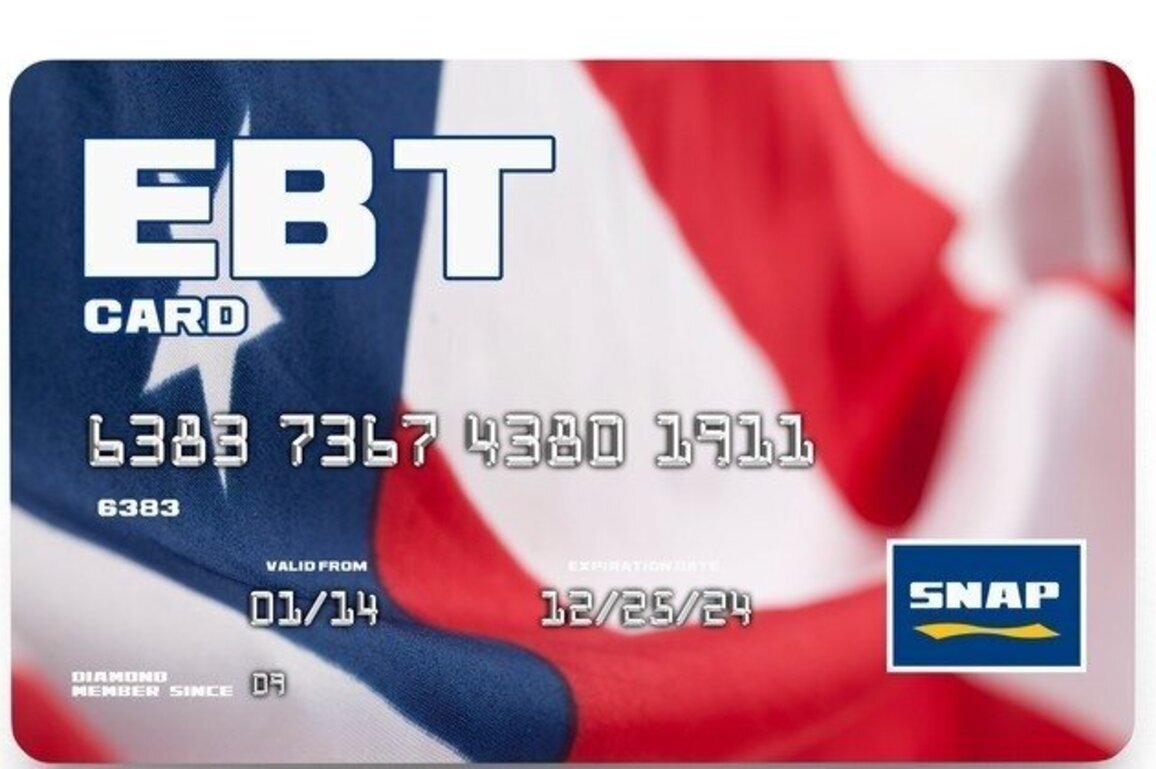
Michiganders applying to enroll in the state’s Supplemental Nutrition Assistance Program may soon find that their cases are being reviewed by artificial intelligence technology.
According to reporting by the Michigan Advance, a state health official announced the use of the newly implemented AI program to members of the state Senate Appropriations Subcommittee on March 17, saying that it will be used in an effort to speed up the review process and assess for cases of fraud, particularly in cases of over- or underpayments.
“Using this AI case reading tool, we’re now not only going to be able to scan every single case in a perfect environment before that money goes out the door, we’re also going to be able to target it to the cases that have the highest likelihood of resulting in a payment error rate,” said David Knezek, the chief operating officer of the Michigan Department of Health and Human Services.
The Michigan League for Public Policy reported that as of July 2025, over 1.4 million Michiganders participated in SNAP.
Michele Gilman, professor of law at the University of Baltimore School of Law, told the Michigan Independent that payment errors are not necessarily fraud.
“Fraud is when someone is intentionally trying to claim benefits that they are not entitled to. That’s not what is going on in the vast majority of overpayments,” Gilman said. “Overpayments and underpayments — which are also a problem, but one we don’t hear much about — are usually the result of innocent errors. Given the complexity of these very complicated programs, the errors are sometimes committed by caseworkers, sometimes committed by claimants. But I say that because it’s very important to use the word ‘fraud’ carefully.”
The budget bill that President Donald Trump signed into law on July 4, 2025, overhauled key aspects of SNAP, implementing stricter eligibility and work rules and requiring that a greater share of program costs be borne by the states.
Previously, the federal government paid 100% of SNAP food benefits. Under the 2025 budget law, states with payment error rates over 6% will be required to pay a percentage of those benefit costs.
“I think the biggest red flag is that Michigan, in particular, has a troubled history with using technological systems to determine eligibility and fraud,’ said Gilman.
Gilman said that history is tied to the adoption of the Michigan Integrated Data Automated System, or MiDAS, used to detect fraud in unemployment claims. Based on analysis by the system, built in 2011 and launched in 2013, the Michigan Unemployment Insurance Agency falsely accused 40,000 Michigan residents of fraud. Michigan law at the time required that those charged with unemployment fraud to pay back all the benefits they had received and an additional 400% penalty.
“People immediately went into extreme financial distress to pay those fees back, resulted in bankruptcies, divorces, all sorts of crisis situations. And as the stories started percolating out, and lawyers started getting involved, eventually, the Michigan state government did an audit of MiDAS, and it found that at least 93% of the fraud accusations were completely wrong, and class actions and other lawsuits were filed, and they’ve been working their way through the system for over a decade.
“There are various settlements. I don’t know if anyone has actually gotten this settlement set yet. It should be happening pretty soon, but we cannot count on litigation to clean up these sorts of algorithmic harms,” Gilman said.
As more and more departments and businesses begin rolling out AI programs that they say will expedite operations, improve services, and augment public safety, Gilman said, it’s vital that local and federal agencies be transparent.
“When you are a citizen dealing with the government over resources you need to survive, you are constitutionally entitled to a clear explanation that you can understand as to why your benefits are granted, cut, or denied, and so that’s absolutely an obligation of this state and something citizens have every right to demand. And at the end of the day, it’s the agency officials who are accountable and must be accountable for these systems. They cannot pass the buck to the vendors who design them,” Gilman said.
A 2024 report from the nonprofit Food Action & Resource Center pointed to the risks of using AI to determine eligibility for SNAP benefits. One of them is the biases of the humans training the machines.
“There are possibilities for malicious actors, or people who are not well-versed in SNAP, to contribute to training algorithms with inaccurate, incomplete, statistically insignificant, or biased information, especially information that is biased on account of race, gender, immigration status, or other identity categories, that perpetuates stereotypes and inequities and prevents people from accessing the benefits they would otherwise be entitled to,” the report reads.
Rebekah Sager wrote this article for the Michigan Independent.
Source: Public News Service